

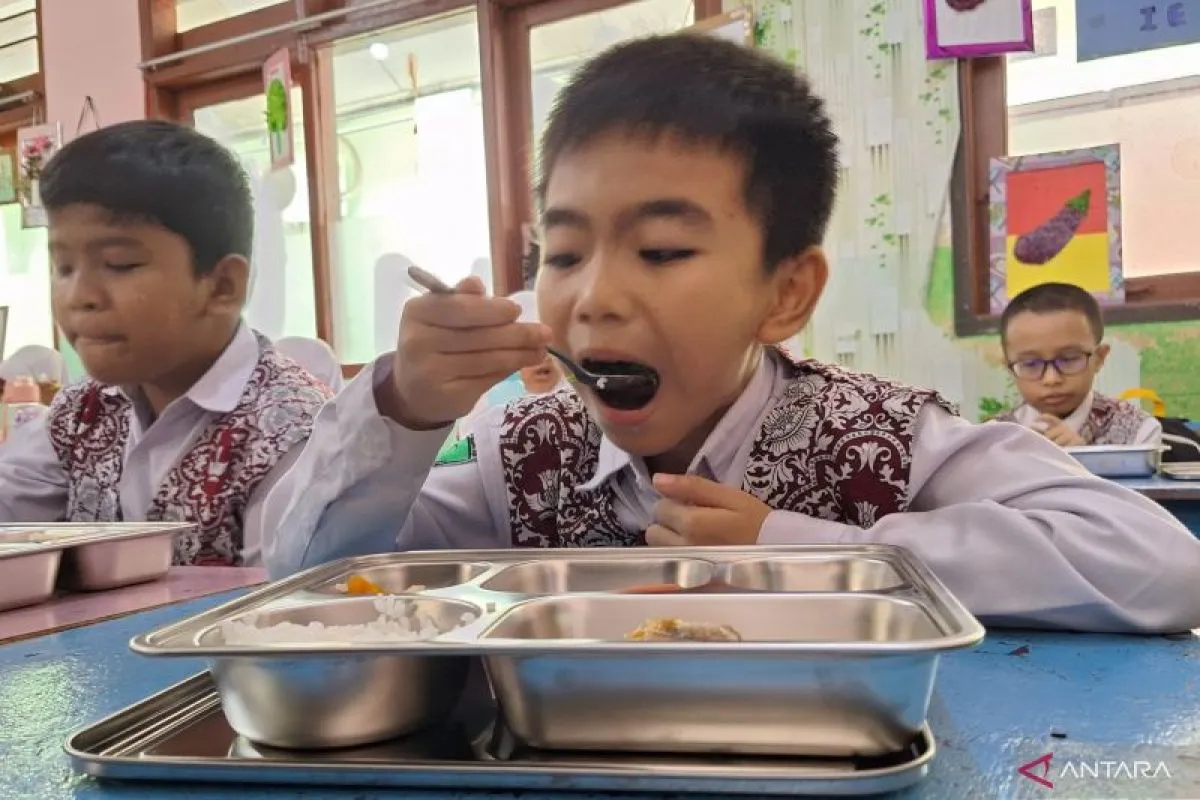
Jakarta (ANTARA) - Indonesia’s National Nutrition Agency (BGN) has reported ongoing coordination with relevant state institutions to anticipate potential price volatility ahead of the Free Nutritious Meals (MBG) program during the Ramadan period, when the prices of basic commodities typically rise.
“I am coordinating with the Ministry of Agriculture to determine which food ingredients should be used or substituted in the program ahead of Ramadan to ensure price stability,” BGN Head Dadan Hindayana said on Monday, (February, 2).
He made the remarks at the 2026 National Coordination Meeting of Central and Regional Governments in Bogor, West Java. At the event, he also highlighted plans to expand MBG coverage beyond schoolchildren to include toddlers, breastfeeding mothers, and pregnant women.
Hindayana said the agency is also working closely with the Ministry of Social Affairs to identify the most effective mechanism to extend the national priority program to elderly people and persons with disabilities who are in need.
He further underscored the program’s economic impact, noting that the government mobilized Rp19.5 trillion, or approximately US$1.1 billion, from the State Budget to support the program in January 2026 alone. According to him, this demonstrates that the MBG program delivers benefits beyond improvements in public health.
“This program has also stimulated the emergence of many new entrepreneurs, including small businesses producing soap, as MBG kitchens require around 25 liters of liquid soap every day,” he said.
On governance, Hindayana assured the public that strict measures would be taken against kitchens that fail to meet food quality and safety standards, referring to several recent food poisoning incidents.
“We will issue warnings to MBG kitchens that do not meet standards. They will be subject to evaluation and may face extended suspensions,” he said.
Since its launch in January 2025, the MBG program has served approximately 60.7 million beneficiaries through 22,275 kitchens nationwide.


