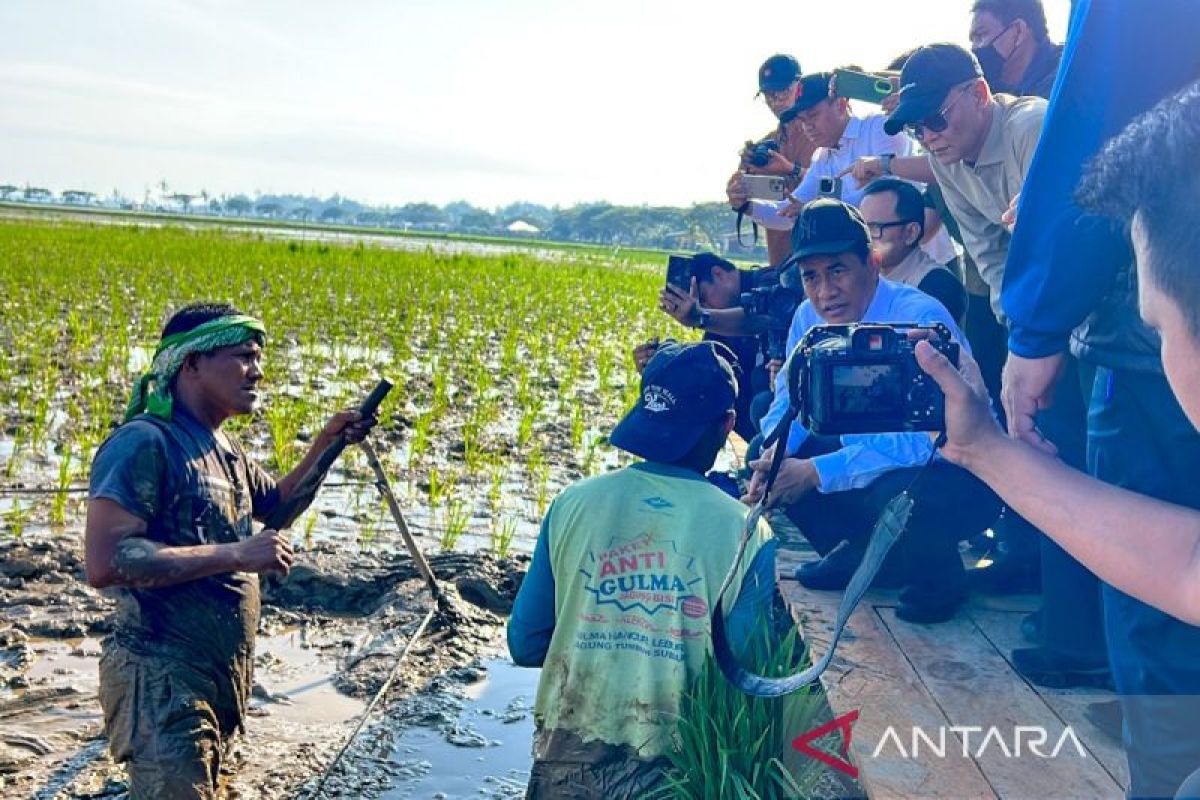
Jakarta (ANTARA) - Indonesia’s Agriculture Minister Andi Amran Sulaiman emphasized the government’s commitment to fully support rehabilitation of rice fields affected by floods and landslides in Aceh during a visit to North Aceh on Thursday.
While inspecting farmland in Pinto Makmur Village, Sulaiman assured locals the government would cover all recovery costs and involve farmers directly, rather than relying on large contractors, to restore productivity efficiently.
“In addition, the government will help provide seeds and fertilizers,” Sulaiman said, underlining the ministry’s role in ensuring farmers receive necessary inputs promptly.
He urged ministry staff to accelerate mud-covered rice field rehabilitation so affected farmers can resume production as quickly as possible.
Sulaiman made the statement alongside Bulog President Director Ahmad Rizal Ramdhani, DPR Commission IV Chair Siti Hediati Hariyadi, and other officials, highlighting coordinated efforts across government agencies.
During a meeting with DPR Commission IV in Jakarta on Wednesday, Sulaiman said the ministry allocated Rp1.49 trillion (US$88.3 million) from the 2026 state budget and proposed an additional Rp5.1 trillion (over US$302 million) for recovery.
He explained that most of the additional budget, Rp3.4 trillion, would be used specifically for rice field rehabilitation, prioritizing the areas most affected by the disasters.
Ministry data show that late November 2025 floods and landslides damaged 107,324 hectares of rice fields across Aceh, North Sumatra, and West Sumatra, with 54,233 hectares in 21 districts and cities in Aceh alone.
Sulaiman said his office had acted swiftly, targeting 13,707 hectares of rice fields across the three provinces in the initial recovery phase to restore agricultural productivity.
He noted the disasters caused crop losses on 44.6 hectares of rice and corn, affected 29,310 hectares of coffee, cocoa, and coconut plantations, and damaged 1,803 hectares of horticultural land.
More than 820 livestock were reported dead or missing. The disasters also damaged 58 slaughterhouses, 74 agricultural mentoring centers, three dams, 152 kilometers of irrigation, and 820 production road points.
Pewarta: M. Harianto, Tegar NurfitraEditor : Vicki Febrianto
COPYRIGHT © ANTARA 2026
Dilarang keras mengambil konten, melakukan crawling atau pengindeksan otomatis untuk AI di situs web ini tanpa izin tertulis dari Kantor Berita ANTARA.


