Jakarta (ANTARA) - Indonesia is hellbent on becoming self-sufficient in food commodities, particularly rice, through a sweeping reform of its agriculture sector. This ambition is fueled by the country’s memory of 1984, when domestic production alone was enough to feed the entire population.
Under President Prabowo Subianto and Vice President Gibran Rakabuming Raka, Indonesia’s new administration has unfurled eight guiding missions—collectively branded Asta Cita—as its blueprint for progress.
At the heart of those missions lies food security, framed not just as the foundation of self-reliance but as a promise to nurture production growth, shield farmers, and sustain the nation’s agricultural system.
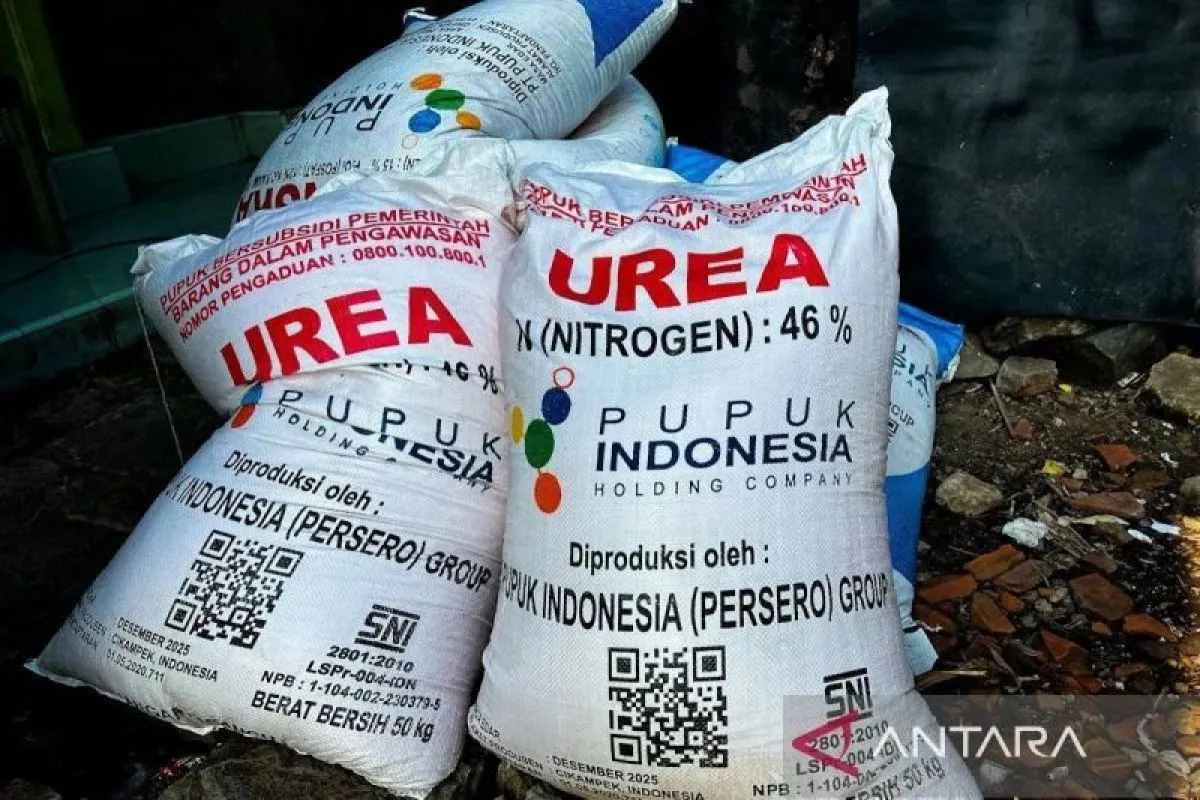
Playing a critical role in this agenda is fertilizer, the decisive force behind farmland productivity. The government is not only working to ensure smooth distribution but also to turn fertilizer into a tool to unlock greater harvests and better livelihoods for farmers.
One vivid example came with the government’s allocation of 9.55 million tonnes of fertilizers into a subsidy program, which cushioned farmers amid volatile production costs and the planting schedules thrown off course by climate change.
Also worth noting is the simplification of requirements in the redemption process, allowing farmers to access the subsidy simply with an ID card and sparing them the trouble of obtaining a Farmers Card. Consequently, farmers can now secure fertilizer in advance to plan better for planting and harvesting, both to maintain soil fertility and to boost yields.
No more hurdles
One afternoon in Ciawi Village, Cirebon, West Java, farmers arrived one after another at a kiosk officially designated for subsidized fertilizer distribution.
The sacks of fertilizer they secured were stacked on the seats of their humble motorbikes, which they rely on to carry their haul through the village’s narrow, winding paths.
Among them was Yoyon (51), chair of the Sri Rahayu Farming Group, who came from Cengkuang Village with the hope of fertilizing his 0.7 hectares of farmland. His farming instinct is to bet on paddies in the first and second planting seasons and mung beans in the third.
He bought two quintals of NPK fertilizer for just Rp460,000 (US$27.50). The memory still lingers of the days when a single quintal of non-subsidized fertilizers cost him Rp1.2 million (nearly US$72), before the redemption process was simplified.
On top of that, a 20-percent cut in subsidized fertilizer prices had been in effect for months, but for Yoyon, who employs 27 farmworkers, January 7 marked the moment he would finally seize the benefit as he mapped out his next planting season.
Rojai (50), who leads the Makmur Farming Group in Tegalkarang Village, echoed the sentiment, delighted that subsidized fertilizer has become easier to obtain.
“Back when the Farmers Card was mandatory, it created headaches—elderly farmers often struggled, forgetting their PINs or misplacing the cards. Now the process is far simpler: we just show our ID cards,” he said, noting that government extension workers are ready to help with registration.
To him, the facilitation was more than policy—it was the government’s way of honoring farmers and winning their trust, ensuring fertilizer reaches them precisely when it matters most, boosting yields, and shielding them from costly planting delays.
In Ciawi Village, Nurianto (62), who runs a subsidized fertilizer kiosk, vouched that distribution proceeded according to government standards, including the regulated retail price.
With backing from local authorities, he said, the kiosk quickly sold out its entire stock as the planting season approached.
Evading imports
In 2025, the Prabowo administration drew a bold line, halting imports for staples like rice and corn—a move buoyed by the steady rise of domestic harvests.
Bulog, the state-run logistics giant, carries the responsibility of keeping rice flowing—storing and distributing it across the country. By December’s close, its warehouses brimmed with 3.39 million tonnes of local rice, after reaching a historic peak of 4.2 million tonnes midway through the year.
More than an administrative feat, the rice abundance embodies Indonesia’s rising confidence as a food powerhouse no longer reliant on imports. This was reflected in the government’s pledge to send Aceh, North Sumatra, and West Sumatra three times their required rice supply after floods and landslides wreaked havoc across the provinces in late November.
The Ministry of Agriculture even claimed that the import ban had ripped across the globe, pushing rice prices down from US$650 to US$340 per tonne and sparking pleas from other nations to keep Indonesia as a customer. The irony was clear: only a year earlier Indonesia had imported 4.5 million tonnes of rice.
Agriculture Minister Andi Amran Sulaiman credited the surplus to pro-farmer absorption policies. From January 15, 2025, the government raised its purchasing price for dry harvested grain (GKP) from Rp6,000 to Rp6,500 per kilogram, regardless of grade.
To make sure the policy runs, Bulog and private mills were ordered to buy GKP at the fixed price, while soldiers were dispatched to stand by farmers—guiding and guarding them against price manipulation.
As a result, Indonesia witnessed a spike in rice production, with Statistics Indonesia (BPS) projecting 34.77 million tonnes harvested between January and December, well above the 2025 target of 32 million and eclipsing the 30 million tonnes produced in 2024.
Moved by this momentum, the government set its sights on declaring rice self-sufficiency by late 2025 or early 2026.
Yet November’s floods and landslides in Sumatra, to some extent, tempered the optimism. Deputy Agriculture Minister Sudaryono admitted the announcement might be postponed, as President Prabowo ordered resources diverted to relief and recovery.
Even so, he asserted that in just a year, the president had rolled out an array of initiatives meant to fortify food security while lifting farmers’ livelihoods—from fertilizer subsidies to irrigation upgrades and farming mechanization.
All things considered, the nation may as well remember 2025 as the year Indonesia laid the groundwork for freedom from imported rice, a milestone toward broader food self-sufficiency.
Expanded fertilizer access has invigorated farmers, sharpened productivity, and nudged the nation closer to its ambition of standing tall among Asia’s powers.