

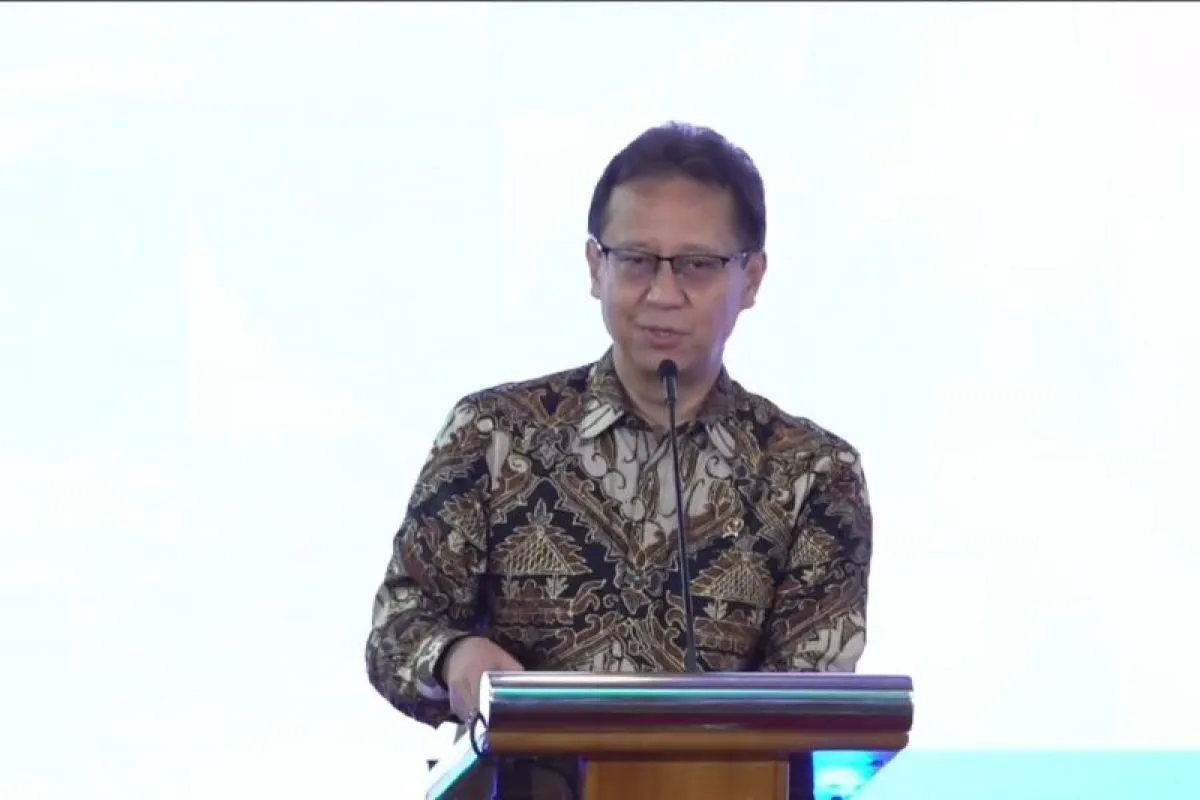
Jakarta (ANTARA) - Indonesia’s health minister said the country’s food and drug regulator has reached a high World Health Organization (WHO) standard and is ready to help Pakistan strengthen its own regulatory system, opening opportunities for cooperation in vaccines and pharmaceuticals.
Health Minister Budi Gunadi Sadikin said Indonesia’s Food and Drug Monitoring Agency (BPOM) has achieved WHO maturity level 4, the highest classification for national regulatory authorities.
“Yesterday, the Pakistani minister came and asked, ‘How can we reach level 4?’ I directed him to BPOM to review its performance. I think this is something Pakistan really needs,” Sadikin said at BPOM’s 25th anniversary celebration on Wednesday.
Sadikin noted that Pakistan has a population of about 240 million people, slightly smaller than Indonesia’s population of roughly 280 million.
However, Pakistan records a higher number of births each year, with around 6.9 million babies born annually, compared with about 4.8 million births per year in Indonesia, he said.
He added that most of Pakistan’s population is Muslim, creating strong demand for halal-certified vaccines and pharmaceutical products.
Pakistan is geographically close to India, the world’s largest vaccine producer, but political tensions between the two countries complicate access, Sadikin said.
He said this situation presents an opportunity for Indonesia to expand exports of vaccines for infants as well as halal pharmaceutical products.
“The Pakistani minister has come to me asking for help, and I told him I am open to it. I will send our vaccine companies there,” Sadikin said.
He added that Pakistan’s drug regulatory authority is currently assessed at WHO maturity level 2.
“I have also asked BPOM to help Pakistan move from level 2 to level 4,” he said.
WHO maturity levels are used to measure the performance, effectiveness and reliability of a country’s drug and food regulatory authority.
In December 2025, Indonesia and Australia were officially designated as WHO-Listed Authorities (WLA), according to the health ministry.
With the inclusion of Indonesia and Australia, there are now 41 WHO-listed authorities from 39 countries worldwide.
Countries that achieve WLA status gain international recognition, allowing their pharmaceutical products and vaccines to be included in WHO-recommended lists for global use.


