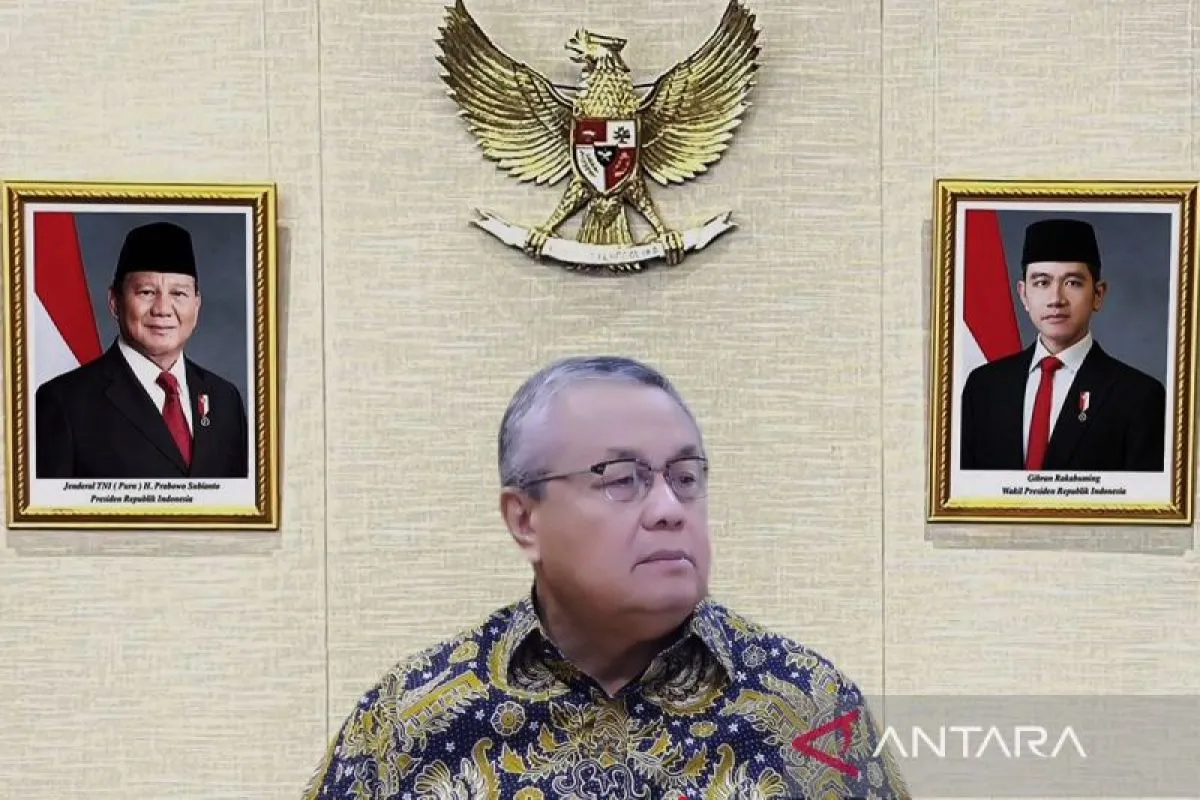
Jakarta (ANTARA) - Bank Indonesia (BI) Governor Perry Warjiyo emphasized that the resilience of the national banking system remains strong enough to mitigate the risks of war in the Middle East.
"This development is characterized by adequate banking liquidity, maintained high capital capacity, and consistently low credit risk," he said during the virtual announcement of the results of the April 2026 Board of Governors Meeting (RDG), here on Wednesday.
The banking capital adequacy ratio (CAR) was recorded at a high 25.83 percent in February 2026, which is considered strong in absorbing risk and supporting credit growth.
The banking sector's non-performing loan (NPL) ratio remained low, at 2.17 percent (of gross) and 0.83 percent (of net) in February 2026.
The results of BI's stress test show that banking resilience remains strong in facing various risks, including the spillover impact of global turmoil from the Middle East war, supported by maintained corporate repayment capacity and profitability.
"Bank Indonesia continues to strengthen macro-prudential policies and policy synergy with the Financial System Stability Committee (KSSK) to maintain financial system stability," said Perry Warjiyo.
On that occasion, he also said that banking credit in March 2026 grew by 9.49 percent year on year (yoy), higher than the growth of 9.37 percent yoy in February 2026.
Based on usage groups, this development was supported by investment credit, working capital credit, and consumer credit, which in March 2026 grew by 20.85 percent yoy, 4.38 percent yoy, and 5.88 percent yoy, respectively, Warjiyo said.
BI predicts that credit growth in 2026 will remain stable at around 8-12 percent, influenced by both supply and demand.
From the demand side, the utilization of bank financing can still be increased, especially by optimizing the unused loan facilities (undisbursed loans), which are still quite large, reaching Rp2,527.46 trillion (US$146.9 million) or 22.59 percent of the available credit ceiling.
Meanwhile, on the supply side, bank financing capacity remains adequate, supported by a Liquid Assets to Third Party Funds (AL/TPF) ratio of 27.85 percent and continued high TPF growth of 13.55 percent year-on-year in March 2026.
"In the future, Bank Indonesia will continue to strengthen banking funding capacity, including the development of non-traditional funding (non-DPK) instruments to support bank credit distribution," the BI Governor said.
Pewarta: M Baqir Idrus Alatas, KatrianaEditor : Vicki Febrianto
COPYRIGHT © ANTARA 2026


