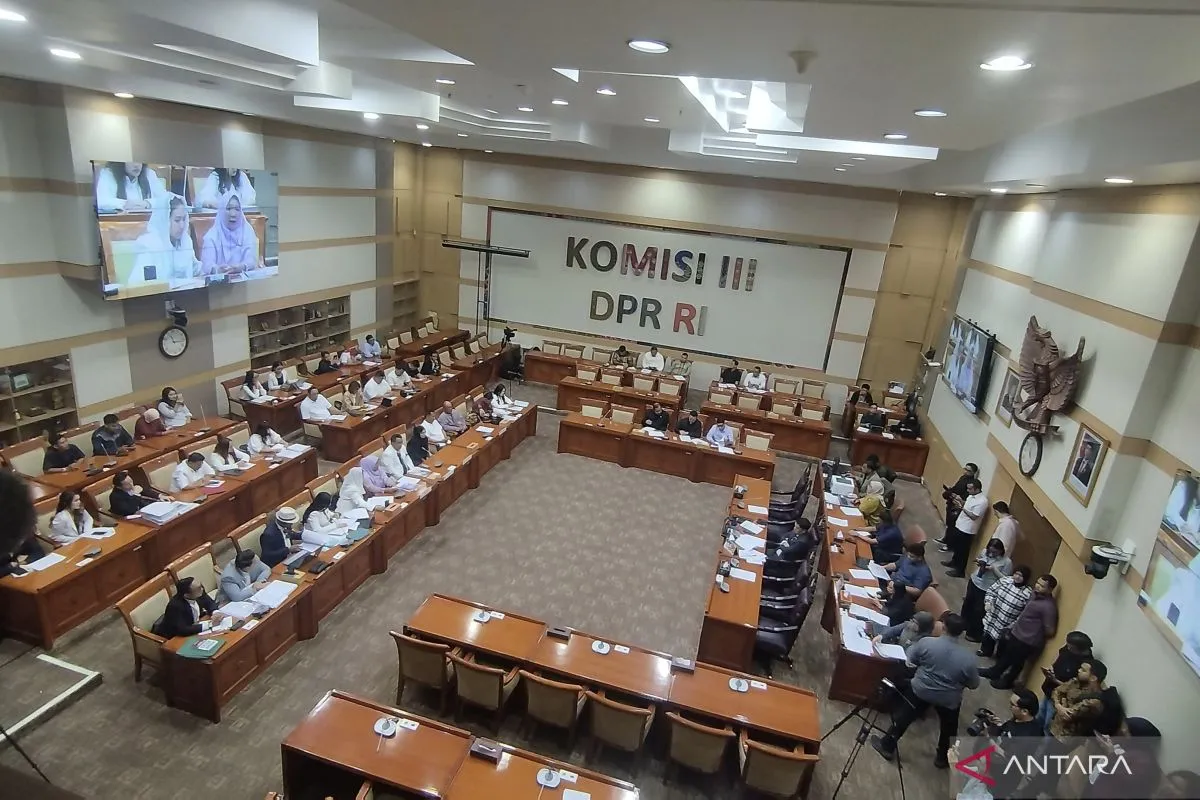
Jakarta (ANTARA) - Indonesia’s House of Representatives (DPR) Commission III on Thursday held a hearing with the family of Fandi Ramadan, facing the death penalty over nearly two tons of methamphetamine found on the Sea Dragon in Batam, Riau Islands.
Fandi’s family attended the session with prominent lawyer Hotman Paris.
Commission III chairman Habiburokhman said the hearing was meant to ensure law enforcement fulfills its duties, not to interfere with the judiciary.
“Commission III does not intervene in the technical handling of ongoing cases by law enforcement,” he said at the parliamentary complex in Jakarta.
He stressed that the death penalty is a last-resort sanction and should be applied selectively, as set out in Indonesia’s Criminal Code.
Habiburokhman said the commission raised the matter to account for public funds allocated to the Supreme Court and lower courts.
He added that these allocations should lead to improved performance and accountability in the justice system.
Earlier, Batam District Prosecutor’s Office Intelligence Section head Priandi Firdaus said the death penalty request for the Sea Dragon crew, including Fandi Ramadan, complies with existing laws.
Priandi said the case, from investigation through trial, has been handled professionally, transparently, and accountably.
“This case is processed under Law No. 35/2009 on Narcotics and the Criminal Procedure Code,” he said in a statement confirmed in Batam on Saturday (Feb. 21).
Prosecutors are seeking the death penalty for six defendants, claiming they knowingly transported the drugs aboard a vessel intercepted at sea.
Attorney General’s Office spokesperson Anang Supriatna said on Feb. 20 the suspects admitted receiving 67 packages, totaling nearly two tons, in a mid-sea transfer.
“They knew they received around 67 packages, or about two tons of meth, at sea,” Anang said.
He said the defendants knew some drugs were stored in the bow and the rest near the engine compartment of the vessel.
Court records showed that Fandi Ramadan received 8.2 million rupiah for his role.
“Based on trial facts, prosecutors concluded he was employed, received payment, transported the goods, and knew they were illegal narcotics,” Anang said.
He added the death penalty request reflects careful consideration of the crime’s scale and cross-border nature.
Pewarta: Bagus AR, Rahmad NasutionEditor : Vicki Febrianto
COPYRIGHT © ANTARA 2026


