

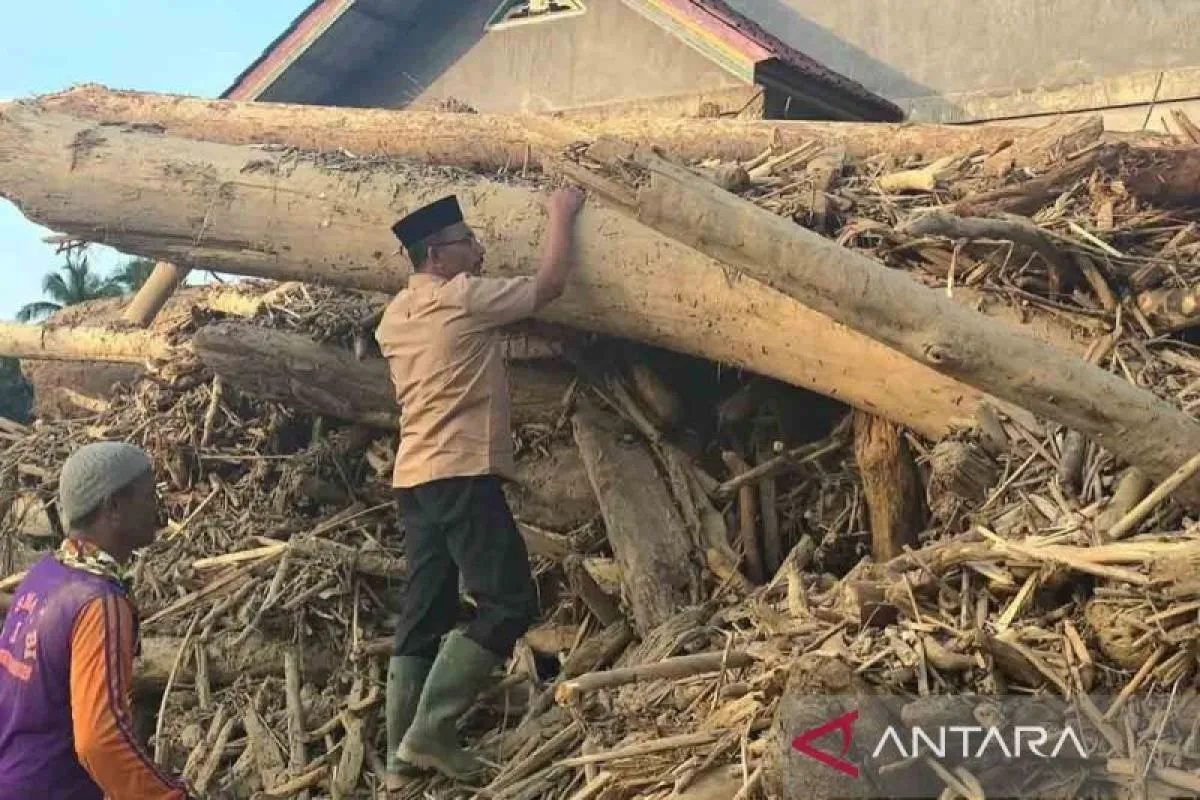
Banda Aceh (ANTARA) - The East Aceh Disaster Management Agency reported that 10,715 homes and public facilities were damaged after severe flooding struck 24 sub-districts last week.
The agency said on Sunday that at least 47 people died and more than 1,200 were injured in the disaster.
More than 204,000 residents have been forced to evacuate, with emergency operations hindered by power outages, fuel shortages, and collapsed bridges that have left many areas isolated.
Head of the East Aceh Disaster Management Agency (BPBD) Afifullah said the figures remain provisional as field assessments are still ongoing. He noted that the numbers may change as access to affected areas improves.
According to BPBD, the injured include 894 people with minor wounds and 306 with serious injuries. Many of the victims are being treated at health facilities that remain open, while others are receiving care at temporary medical posts in evacuation centers.
Of the damaged structures, 3,823 were severely damaged, 3,316 sustained moderate damage, and 3,576 suffered light damage. The destruction includes homes, collapsed bridges, landslide-affected roads, schools, places of worship, community halls (meunasah), docks, and other public service facilities.
“The damage to infrastructure has disrupted economic activity, education, and essential public services across several affected areas,” Afifullah said.
The floods have affected 235,127 people from 55,483 families. BPBD said 204,867 people, representing 47,094 families, have taken refuge in evacuation centers, while 33,752 people from 8,543 families have remained in their homes.
Authorities have identified 820 evacuation sites, including schools, community halls, public buildings, and private homes that remain safe enough to shelter residents.
Floodwaters reached depths of 10 centimeters to three meters, inundating 413 villages across East Aceh. Many areas remain cut off due to damaged bridges, landslides, and impassable roads.
Emergency response efforts continue to face significant challenges, including widespread power outages, limited fuel supplies that hinder transportation, and disrupted communication networks. A shortage of rubber boats and several fully severed access routes have slowed the delivery of aid and medical services to isolated communities.
“Disaster response teams are working at full capacity. Our top priorities are ensuring residents’ safety, evacuating victims, and meeting the basic needs of displaced families,” Afifullah said.
Severe flash floods and landslides across Aceh, North Sumatra, and West Sumatra have caused catastrophic destruction, with the death toll rising to at least 914 people, according to Indonesia’s National Disaster Mitigation Agency (BNPB).
Aceh remains the hardest-hit province, followed by North Sumatra and West Sumatra, as rescue teams continue searching for hundreds of missing residents. The scale of the disaster has expanded as authorities gain access to previously isolated areas.
The floods have also left thousands injured and caused widespread infrastructure damage. BNPB reported that more than 105,900 houses, along with schools, health facilities, places of worship, government offices, and over 400 bridges, have been damaged or destroyed across 52 districts and cities.
In many areas, collapsed bridges, landslides, and washed-out roads have cut off entire communities, complicating rescue operations and slowing the delivery of aid.


